The Russian war economy is a bubble waiting to burst

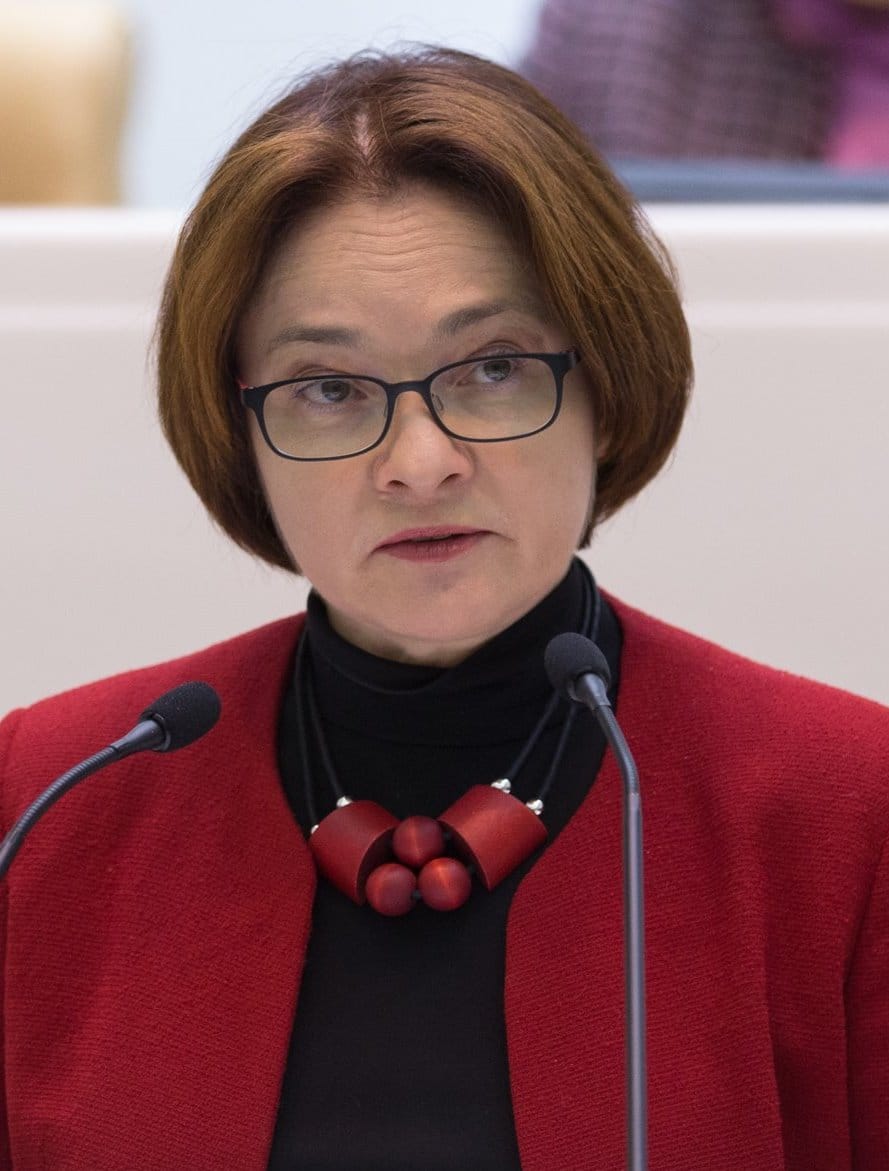
While everyone is looking to the United States and guessing what the election of Donald Trump will mean for Ukraine's ability to sustain the war, something interesting is happening in Russia. What appears to be an organized campaign is targeting the head of Russia's central bank, Elvira Nabiullina, and it now looks like she might lose her job in the near future.
This is interesting because, until recently, Nabiullina was broadly praised as a genius who had saved the Russian economy at a time when other countries introduced sanctions and tried to damage it. Now, the same voices are calling Nabiullina an idiot, claiming she is responsible for the destruction of the Russian economy due to stupid and irresponsible monetary policies of the central bank.
Destroying the Russian industry
The problem started when Nabiullina, in late October, announced that the central bank would increase the interest rates to 21%. This was the latest in a long series of interest rate increases, which the central bank has implemented in an attempt to control the inflation.
As a reaction, the CEO of Rostec, Sergei Chemezov, gave a speech in the Russian Federation Council, where he criticized Nabiullina's approach and called it irresponsible. According to Chemezov, it is absolutely impossible to run a business in Russia if the interest rate is 21%. According to Chemezov, it is a normal part of business operations to borrow money to cover production expenses because there is a time gap between receiving an order and getting paid by the customer. If the interest rate that the business has to pay to the bank is 25%, then it is impossible to make a profit. If this continues, then according to Chemezov, the entire Russian defense industry will stop exporting to world markets because it is impossible to compete with foreign companies. The high interest rate will therefore lead to a wave of bankruptcies across many different sectors of the Russian economy.
Chemezov is one of the most powerful men in Russia. He is very close to Putin personally, and he is extremely rich and influential. There is speculation that Chemezov played a role in persuading Putin to sack Sergei Shoigu as defense minister and replace him with Andrey Belousov. And now, apparently, he is after the head of the central bank.
After Chenezov’s speech, a choir of different voices has chimed in on the criticism of Elvira Nabiullina. This ranges from experts in finance and economics to war bloggers who believe that she's obstructing Russia's war effort.
Fighting inflation
On one hand, the critics are right. It is impossible to run businesses in Russia when the interest rate is so high. On the other hand, it is also true that inflation is high and still increasing. To get inflation under control, it is necessary to reduce economic activity in the country, and the only tool the central bank has to achieve this is to increase interest rates.
In other words, the Russian economy is in deep trouble. There is no good solution to the problem they have. If they keep the interest rates low, businesses can continue to operate, but Russia is headed for hyperinflation, akin to what we saw in the 1990s. But if they increase the interest rates to get inflation under control, that can drive businesses out of operation and lead to a recession.
Don't mention the war
What we are seeing is a symptom of the fact that the Russian economy is deeply unhealthy. The only thing they can do to actually save the economy is to stop the war. Neither Chemezov nor Nabiullina mentions the war in this discussion, and it is clear that this topic is politically impossible to bring up. It is not Nabiullina's job to have an opinion about the war in Ukraine. It is her job to make the economy work so Putin can wage the wars he wants.
The simple fact is that it is impossible for Nabiullina to keep inflation under control as long as the Russian state continues to pour so much money into the defense industry and the workforce through bonuses and high wages paid to contract soldiers. On top of that, the sanctions against Russia are beginning to show effect. There is a shortage of raw materials and technology for the Russian industry, which means that different businesses are competing with each other for the same scarce resources.
That is why inflation keeps rising even while the central bank continues to increase interest rates. In short, it means that the central bank has run out of tools to control the economy. As long as the war continues and the sanctions against Russia are upheld, the Russian economy is headed for collapse. The central bank is doing what it can to delay this process, but we are reaching a point where it is beginning to be painful for the Russian industry, and the point of collapse suddenly appears to be closer.
The war economy will collapse
It is difficult to say exactly when this will happen, but I think at this point it is useful to think of the Russian war economy as a bubble that will eventually burst. And just as with the dot-com bubble or the subprime mortgage crisis, it will appear to be a quite random event that suddenly triggers a domino effect. This can be a business that goes bankrupt, which then leads to the bankruptcy of another business, and subsequently to the bankruptcy of a third one, and so on.
And, of course, for Ukraine, this gives reason for optimism. It is becoming obvious that Russia's war economy is unsustainable and that there will be an end date to their ability to continue sustaining the war. This wartime economy, which is on the verge of collapse, has so far demonstrated that it is just barely able to sustain the current war in Ukraine by drawing heavily on stockpiles of old Soviet equipment. Within the next year, these stockpiles will begin to empty for many types of equipment, and it is hard to see how the Russians would be able to increase the production when the economy is already on its limits.
In the meantime, Nabiullina will probably lose her job. Chemezov is too big an opponent for her in the Russian system. This means we should probably expect the Russian Central Bank to stop increasing interest rates, and then it will be interesting to see how high inflation will get and what kind of societal consequences that will have in Russia.